Platform Engineering: The Next Evolution Beyond DevOps
DevOps solved the wall between development and operations. Platform engineering solves the next problem: developer cognitive overload. Here's what it is, why it matters, and how leading organisations are building internal developer platforms that actually get used.
The DevOps Fatigue Problem
DevOps was transformative. Breaking down silos between development and operations, building CI/CD pipelines, embracing infrastructure as code — these changes accelerated delivery and improved reliability across the industry. But DevOps created a new problem: it asked developers to become experts in everything.
In a mature DevOps environment, a developer is expected to understand Kubernetes, Terraform, Helm charts, service meshes, observability tooling, security scanning pipelines, cloud IAM, and a dozen other infrastructure concerns — on top of the application code they actually want to write. The cognitive load has become unsustainable.
Gartner predicts that by 2026, 80% of large software engineering organisations will establish platform engineering teams as providers of reusable tooling, components, and services. Platform engineering is the industry's response to the complexity it created.
What Platform Engineering Actually Means
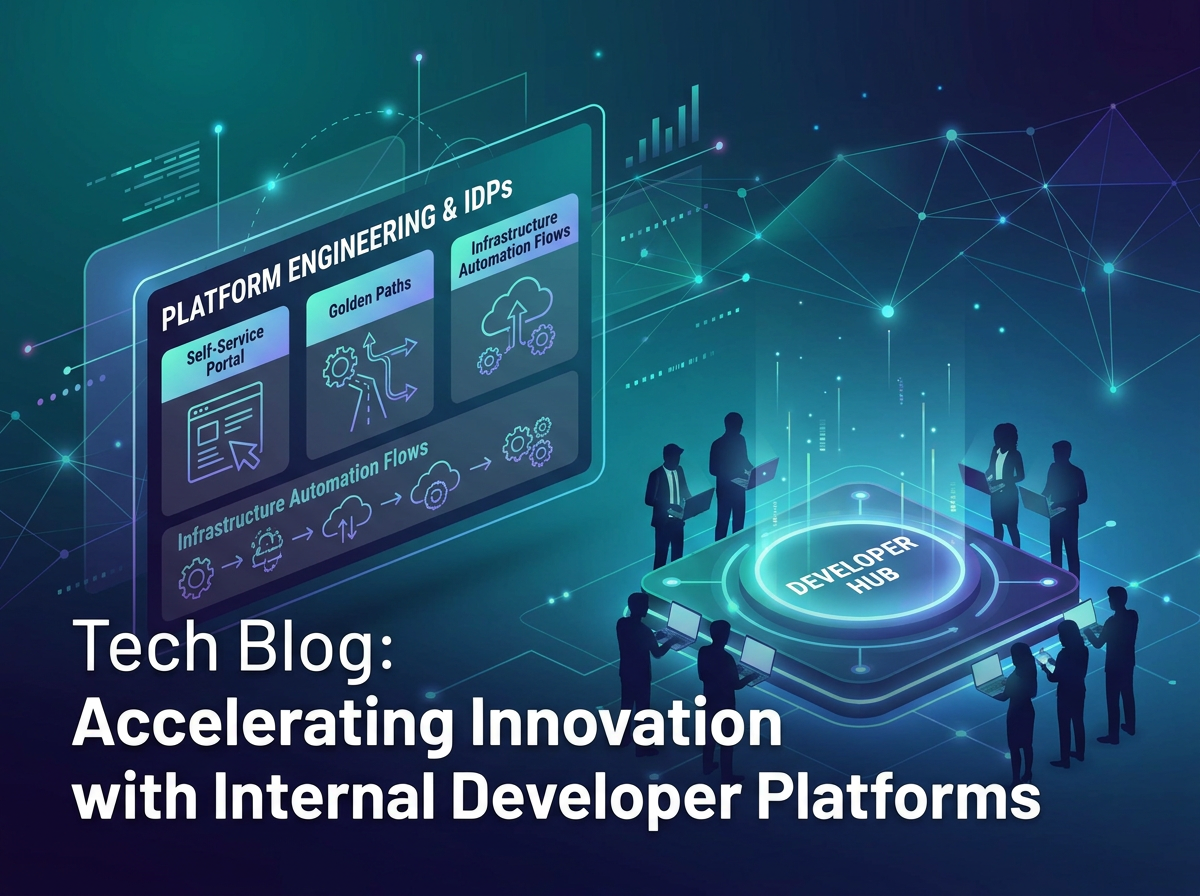
Platform engineering is the discipline of designing and building self-service internal developer platforms (IDPs) that abstract away infrastructure complexity. The platform engineering team acts as an internal product team — their customers are the application developers in their organisation.
The key word is "self-service." The goal isn't to centralise all infrastructure decisions in a platform team; it's to build the "golden paths" — opinionated, supported workflows that let developers deploy, monitor, and scale applications without needing deep infrastructure expertise.
A well-built IDP lets a developer go from "I have code" to "my code is running in production with observability, security, and proper resource allocation" without filing tickets with an operations team or reading documentation for days.
The Core Components of an IDP
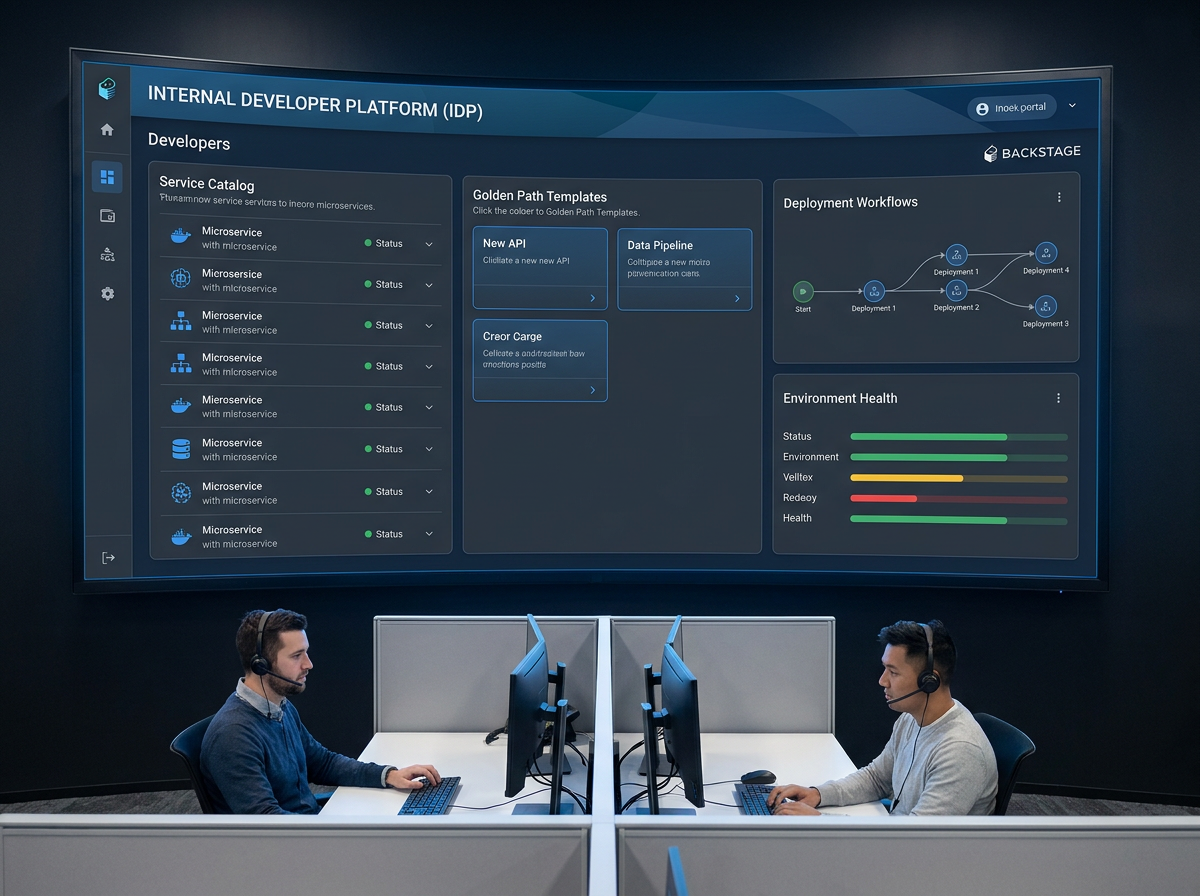
Developer portal — The front door to the platform. Spotify's Backstage has become the dominant open-source foundation here. A developer portal provides service catalogues, documentation, software templates, and visibility into the health of all services a team owns.
Self-service infrastructure provisioning — Developers request databases, queues, caches, and storage through the portal or a CLI — the platform provisions them automatically via Terraform or Crossplane, correctly configured, with appropriate security controls. No ticket, no wait.
Golden path CI/CD templates — Pre-built, opinionated pipeline templates that handle testing, security scanning (SAST, DAST, dependency scanning), container building, and deployment. Developers plug in their application code; the platform handles the rest.
Environment management — Ephemeral preview environments, feature branch environments, and promotion workflows from dev to staging to production. Developers get fresh, isolated environments on demand without infrastructure overhead.
Integrated observability — Every service deployed through the platform automatically gets logging, metrics, and distributed tracing. The platform injects the OpenTelemetry SDK, configures exporters, and provisions dashboards. Observability is a capability of the platform, not an afterthought.
Platform Engineering vs. DevOps: The Key Difference
DevOps is a culture and set of practices. Platform engineering is a discipline that implements those practices as a product. The distinction matters because products have users, user experience, documentation, SLAs, and feedback loops. Platform teams that treat their IDP as a product — measuring adoption, running user interviews, tracking time-to-productivity for new developers — build platforms that get used. Platform teams that treat the IDP as an IT project build portals that collect dust.
The most important metric for a platform team isn't deployment frequency (that belongs to the application teams) — it's platform adoption rate and developer satisfaction. If application developers aren't using the golden paths, either the paths don't lead where developers need to go, or the paths aren't well-maintained enough to trust.
Common Pitfalls to Avoid
Building a platform nobody uses — The most common failure. Platform teams build capabilities without understanding what developers actually need. Start with user research. What are the most time-consuming, frustrating parts of your developers' workflow? Solve those first.
Over-engineering the initial platform — Resist the urge to build a perfect, comprehensive IDP before launching. Start with one golden path — perhaps a basic microservice deployment template — and get real feedback from real users before expanding.
Treating it as a centralised control mechanism — Platforms that feel like bureaucracy will be circumvented. The goal is to make the right thing the easy thing, not to enforce compliance through friction.
Under-investing in documentation and onboarding — Platform engineering teams often have strong infrastructure backgrounds and weaker documentation instincts. Great platforms are discoverable and learnable. Documentation is a first-class deliverable.
Getting Started: A Pragmatic Roadmap
For organisations beginning their platform engineering journey, the recommended starting point is a capability audit. Map what your developers currently have to do manually to deploy a service to production. Count the steps, the tools, the documentation they need to read. That map becomes your initial backlog.
Phase one should focus on reducing the highest-friction item on that map. For most organisations, that's either environment provisioning or CI/CD pipeline setup. Pick one. Build a self-service solution. Measure how much time it saves. Use those numbers to justify expanding the programme.
Platform engineering is a multi-year investment. The organisations that started building IDPs in 2023-2024 are now seeing compound returns: faster onboarding, lower cognitive overhead, improved security posture, and application teams that can focus almost entirely on product code. That's the promise of platform engineering — and it's increasingly deliverable.

How CBM Can Help
Build the Platform Your Developers Actually Want
CBM helps enterprises design and build internal developer platforms that reduce cognitive load, accelerate delivery, and make the right infrastructure choices the default. From Backstage implementations to full IDP programmes — we've built the golden paths.
Ready to Get Started?
Reach out for a quick assessment and proposal. Most engagements kick off within days, with a dedicated team aligned to your goals.