FinOps in Action: Cutting Cloud Waste in Multi-Cloud Environments
Cloud bills are spiralling. FinOps gives engineering and finance teams the shared language — and the tooling — to take back control across AWS, Azure, and GCP simultaneously.
The Cloud Spend Problem Nobody Talks About
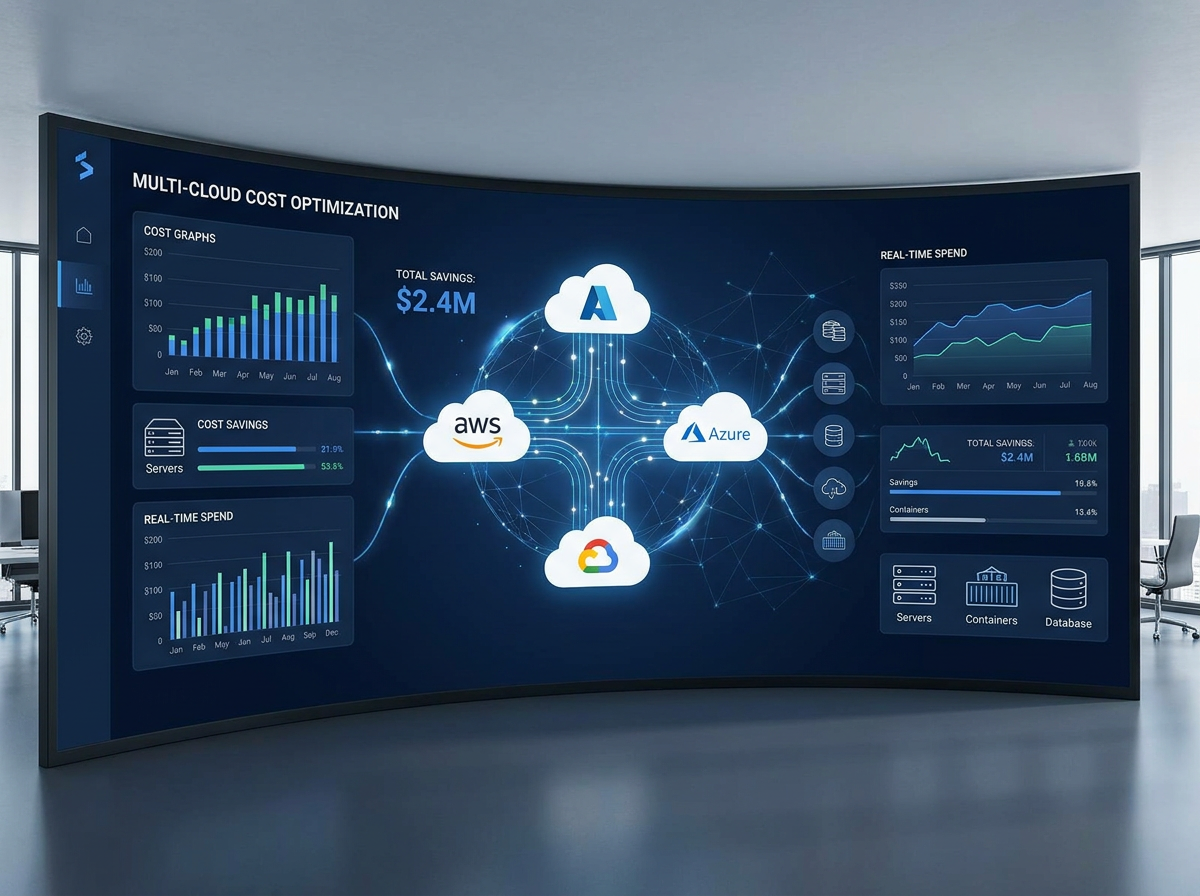
The average enterprise now runs workloads across 2.6 cloud providers. That flexibility comes at a cost: Gartner estimates that 35% of enterprise cloud spend is wasted on idle resources, over-provisioned instances, and orphaned storage. For a company spending £5 million per year on cloud infrastructure, that's £1.75 million going nowhere.
The problem isn't that cloud is expensive — it's that multi-cloud environments are extraordinarily difficult to observe holistically. When your billing data lives in three different portals, each with different terminology and granularity, it's nearly impossible to make informed financial decisions at pace.
What FinOps Actually Is
FinOps (Financial Operations) is a cultural and operational framework that brings together engineering, finance, and business stakeholders to make data-driven cloud spending decisions. It's not a cost-cutting exercise — it's about ensuring every pound spent on cloud delivers maximum business value.
The FinOps Foundation defines three maturity phases:
Crawl — Establishing visibility. Teams gain basic cost allocation, tagging strategies, and budget alerts. You know what you're spending, even if you don't yet know why.
Walk — Optimisation. Teams actively rightsize resources, implement savings plans, and establish showback/chargeback models so business units see their actual cloud costs.
Run — Automation and culture. Cost efficiency is embedded in CI/CD pipelines. Engineers get real-time cost feedback before deploying. Finance and engineering operate from a single source of truth.
The Multi-Cloud FinOps Challenge
Each cloud provider uses different terminology for similar concepts. AWS calls it an EC2 instance. Azure calls it a Virtual Machine. GCP calls it a Compute Engine instance. They each have different pricing models, commitment discount structures (Reserved Instances vs. Savings Plans vs. Committed Use Discounts), and billing granularities. Normalising this data into a unified view requires either a purpose-built platform or significant engineering investment.
The most effective multi-cloud FinOps stacks typically combine:
A cloud cost management platform — Tools like CloudHealth, Apptio Cloudability, or FOCUS-compliant open-source alternatives provide unified billing ingestion, tagging normalisation, and cross-cloud allocation. CloudZero and Finout have emerged as strong contenders in 2026 for engineering-led FinOps programmes.
Native cost explorer tooling — AWS Cost Explorer, Azure Cost Management, and GCP Cost Management provide granular data that third-party tools sometimes smooth over. Use them for deep-dives; use the unified platform for governance.
Infrastructure-as-code integration — Infracost and Terraform Cloud's cost estimation features let teams see the cost impact of infrastructure changes before they're applied. This shifts cost accountability left.
Five High-Impact FinOps Wins
1. Rightsize compute resources — The single highest-value action in most environments. Cloud providers now offer compute optimiser tools that analyse utilisation patterns and recommend instance type changes. Rightsizing alone typically delivers 20-30% cost reduction on compute spend.
2. Implement savings plans and committed use discounts — If you're running steady-state workloads, paying on-demand is costing you 30-40% more than necessary. AWS Savings Plans, Azure Reserved Instances, and GCP Committed Use Discounts all offer significant discounts in exchange for 1-3 year commitments. The key is committing to the right baseline — typically 60-70% of your average compute spend — and covering peaks with on-demand.
3. Enforce consistent tagging policies — Without tags, cost allocation is impossible. Every resource should carry at minimum: team/owner, environment (prod/staging/dev), application, and cost centre. Use tag policies enforced at the account/subscription level, not optional guidelines.
4. Eliminate zombie resources — Unattached EBS volumes, unused Elastic IPs, idle load balancers, forgotten test environments — these accumulate over time and represent pure waste. Automated cleanup scripts run weekly can recover 5-15% of total spend with zero business impact.
5. Optimise data transfer costs — Data egress is often the hidden killer in multi-cloud architectures. Moving data between cloud providers or out of cloud to on-premises carries significant per-GB charges. Architect data flows to minimise cross-cloud transfers and leverage CDNs for content delivery.
Building a FinOps Culture
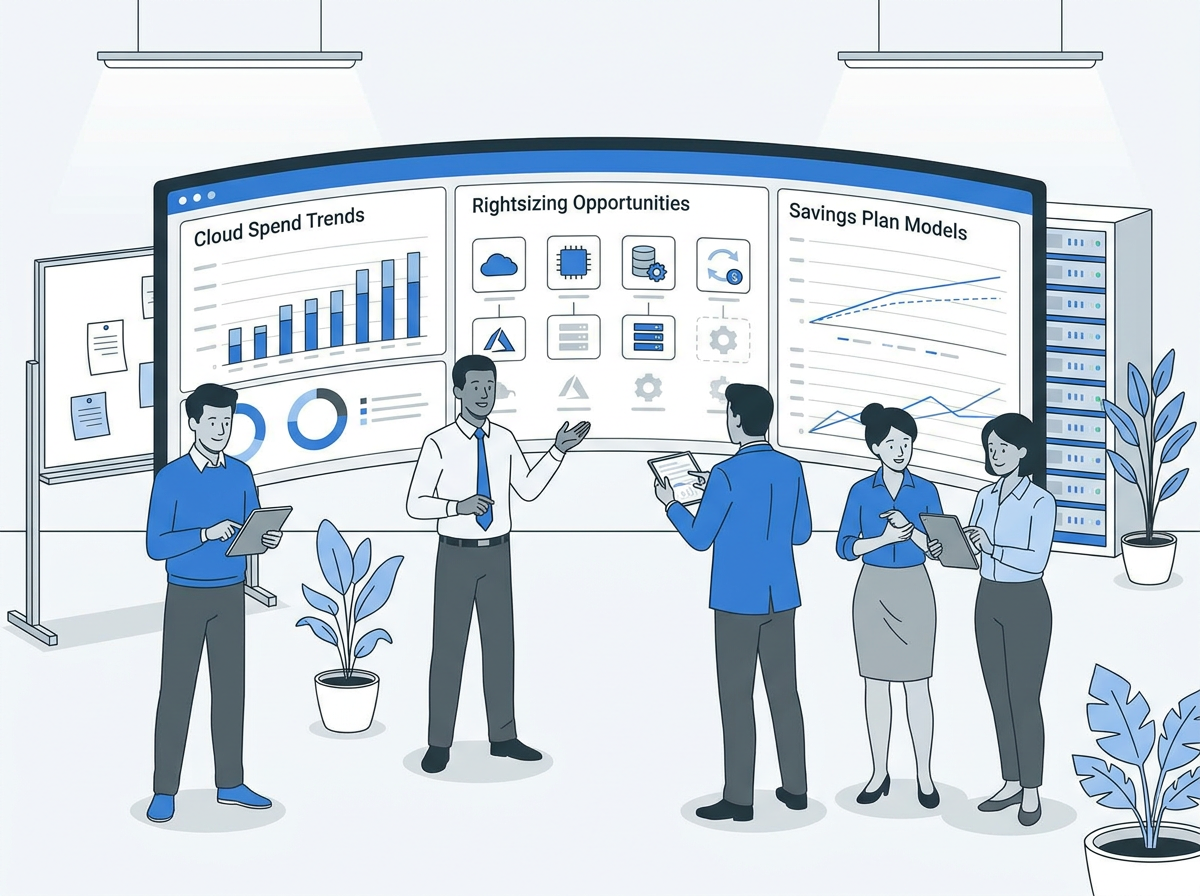
Technology is only 30% of FinOps. The other 70% is organisational change. The most common failure mode is treating FinOps as a finance initiative rather than an engineering one. Engineers need to own their cloud costs, see them in real time, and be empowered to optimise them without sacrificing velocity.
Successful FinOps programmes typically establish a dedicated FinOps practitioner or team, create monthly cost reviews that include engineering leads, embed cost metrics in team OKRs, and build anomaly detection that alerts engineers — not just finance — when costs spike unexpectedly.
The shift happens when engineers start asking "how much will this cost?" alongside "how will this perform?" That cultural shift is the real FinOps prize.
Where to Start
If you're just beginning your FinOps journey, resist the urge to invest in tooling before establishing visibility. Start by tagging all resources, enabling cost allocation tags in all three cloud providers, and building a unified dashboard — even if it's a spreadsheet fed from billing exports. Once you can see the full picture, the optimisation opportunities become obvious.
For mature organisations looking to advance from Walk to Run maturity, the focus should shift to automation: automated rightsizing recommendations, automated savings plan purchases, and cost gates in deployment pipelines. At this stage, FinOps becomes a competitive advantage — your competitors are paying 30% more for the same infrastructure.

How CBM Can Help
Take Control of Your Cloud Spend
CBM helps enterprises build FinOps practices that deliver measurable cost reductions across AWS, Azure, and GCP. From initial visibility programmes to fully automated cost governance — we bring the expertise to make it happen fast.
Ready to Get Started?
Reach out for a quick assessment and proposal. Most engagements kick off within days, with a dedicated team aligned to your goals.